
1 & 2 STROKE KANJI:
IN THE BEGINNING…
The only real valuable thing is intuition. – Albert Einstein
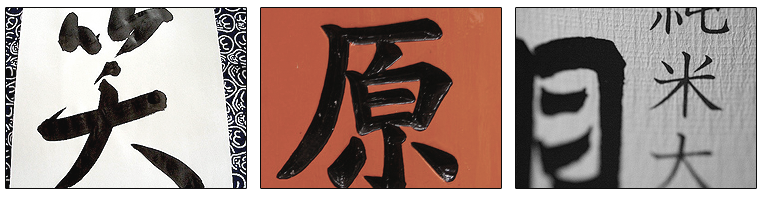
Up until now, you have been learning “fake” kanji. Radicals, the pieces that make up kanji, wish in all their hearts that they can become like their older brothers and sisters. Some of them do, some of them don’t (and we’ll learn all about that). By learning from the younger kids, though, you’ll know exactly how to take on the older ones, and soon, you’ll be sitting at the adult table in all your (kanji) family gatherings.
AN INTRO TO (REAL) KANJI
Welcome to the monster that is called “kanji.” You’ve gotten a great introduction to it (as long as you spent time learning the radicals. If not, go back and get to it). There are three aspects of kanji which makes it especially difficult to learn.
- Each kanji often has multiple pronunciations depending on where / how it is used.
- Kanji can be combined with other kanji to create words.
- Kanji is difficult to read (and especially) write.
We’re going to take a pretty novel approach at tackling this problem. You’ve already completed the first step (i.e. learning the ABC’s of the kanji; the radicals), but the fun part is yet to come. First, though, you have to learn a little more about how kanji works within the Japanese language.
Big Picture Takeaway
Kanji is hard :(
Big Picture Takeaway Response
Don’t panic, you hoopy frood!
The first thing you need to learn a little bit about is the おん and くん readings.
おんよみ
おんよみ (おん readings) are the original Chinese readings. Since kanji came from China, a lot of the pronunciations came with it. Now, of course, the Japanese and Chinese languages have different pronunciations, but the おん reading is generally a close approximation of the original Chinese reading. They won’t always be exact (or close), so you can’t say you know how to speak any form of Chinese after learning kanji in Japanese, but you could definitely get part way there, I suppose.
One of the problems with this, though, is that multiple kanji were introduced to Japan multiple times (at different times in history), which means the meanings and pronunciations sometimes changed too. Because of this, many kanji have multiple おん readings. Although in most cases, this would just mean you have more to memorize, we’re going to use the 80-20 rule and just learn the pronunciations that will be right 80 or 90 percent of the time, because in general only one おん reading is used almost all of the time. You’ll learn the other less common pronunciations later.
おんよみ usually occurs in multi-kanji compound words (which are known as jukugo). Jukugo is generally more formal (though not always) and more intellectual (also not always) than the くん counterparts.
Big Picture Takeaway
おんよみ is the original Chinese pronunciation of a kanji as it was imported to Japan. There are often multiple pronunciations for a single kanji, though most of the time 1 or 2 of them will be used 90% of the time, meaning we can focus our efforts.
くんよみ
The くん reading comes from the pronunciation of native Japanese words which were associated with a kanji as it was being introduced. In Chinese, one kanji usually represented one syllable. Since this doesn’t work in Japanese, you’ll usually see that with a くんよみ kanji pronunciation there will be hiragana attached to the kanji to finish out the word. For example, the word “to eat” is as follows.
食べます = たべます
The kanji portion is pronounced た but it doesn’t make any sense unless the hiragana portion is attached to it to make たべます (to eat). Not all kanji have hiragana attached to them, however. There are plenty of kanji with くん readings that stand up on their own. For example, the native Japanese pronunciation for the kanji 西 (west) is にし while the おん reading is すい or せい (which are modified one-syllable Chinese sounds).
Big Picture Takeaway
くんよみ is the original native Japanese pronunciation of a word associated with a kanji as it was being introduced. Often times, hiragana will be attached to these words to “complete it.”
When to use おん or くん readings
Knowing when to use each pronunciation is very difficult. There are some general rules that might help, though.
- When a kanji is sitting on its own, often times you’ll use the くん reading (though there are a ton of exceptions to this).
- A lot of the time, you’ll have to have prior knowledge of a particular word before you can know the pronunciation of it. Often times you can guess, but it’s not like English, which lets you phonetically figure out the pronunciation. With kanji, preparedness is key. Even native Japanese speakers can’t always figure out the pronunciation of a word if they haven’t learned it in context before.
- There are always exceptions, and they show up all the time, so you might as well start learning these things now.
With that, let’s get started learning about how you’re going to learn kanji here on TextFugu. Like anything, if you want to get good at it, you’ll have to practice. Kanji is no different, and even though we’ll be going about it as efficiently as possible, it will definitely take some time to learn these.
TEXTFUGU KANJI METHODOLOGY
Here’s how TextFugu does things with kanji. The idea isn’t to go from simplest word meaning to most difficult word meaning. Kanji doesn’t work that way. Difficult words (in meaning) can have really simple kanji, and really easy words (in meaning) can have really difficult kanji. Unfortunately, if you learn that way, you will be learning very difficult kanji early on. The most important thing is to build kanji on top of each other, so the idea is that we’re going to start with simple kanji (in terms of how easy it is to read / write it) and work our way up.
Each kanji is broken up into several parts:
- The kanji
- The build of the kanji (i.e. how to put it together). This will be less important initially, but become more and more necessary as kanji get more complicated.
- おん reading (not all kanji will have this)
- Mnemonic device to help you remember the おん reading as well as how to write it. I’ll also help you really imagine and feel the stories as well. The more you introduce your senses into the equation, the better your memory will be of it.
- くん reading (not all kanji will have this)
- Common words that use this kanji, to help you learn both the おん and くん readings.
- Link to a Smart.fm list that will help you learn these words, which will help you to learn various pronunciations of the kanji depending on how / where it is being used.
Through the first few kanji, you will be guided step-by-step. After a while, a lot of the guides will fall away, and you’ll be able to learn kanji in peace (and at a faster rate). Kanji will be introduced in groups, and TextFugu lessons will tell you when and what kanji you should learn as you’re going through them. The idea is consistency (and not bursts of study). If you learn 10-20 kanji a day, you could be at 1000 kanji 50 days, which is really really fast. Most people spend years learning that much kanji, not to mention various common words that go along with it!
Big Picture Takeaway
Consistency is key. Study a little bit every day and you’ll be much better off than the person who studies once a week for 12 hours at one time.
The kanji that you’ll be learning is called 常用(じょうよう) kanji – this is the kanji you need to know in order to function in Japanese society (and read a newspaper). There are approximately 2000 kanji to be learned (that’s a lot, right!?) but we’ll make sure they build on each other pretty nicely, so it won’t be as hard as you think. Although there are many more kanji besides 常用 kanji, these are the most useful kanji and will get you the farthest. Sure, after you learn these there will be another 2000-3000 kanji you don’t know, but you don’t need them (right now). The first 2000 kanji will allow you to read 95% of what’s out there. Heck, even learning the first 1000 will get you 70-75% of the way.
Anyways, it’s time to get started. Just follow the detailed steps provided in these first few kanji and you’ll be okay. This is exciting (maybe more exciting for me than you)! It’s like your first steps as a baby.
YOUR FIRST KANJI
These are your first 14 kanji, which consist of the all the 1 and 2-stroke kanji in the 常用 list. These of course are the easiest (and simplest) kanji out there, which makes them a good introduction into kanji learning. You’ll notice that a lot of these are also the same as the radicals we learned in the radical chapters. There definitely will be a good amount of overlap in the early stages. But, since you know a lot of the below kanji, you can focus on the hard part: Remembering how to pronounce the suckers. Through practice (as well as some memory tricks) you’ll be learning kanji in no time.
Quickly, before you get started, here are some quick things to keep in mind:
- Green is the pronunciation of the kanji (usually the おんよみ, though it can be the くんよみ if there is no おんよみ).
- Purple is the meaning of the kanji.
- Practice lists will be available for each kanji, which consists of the common words. You can use this to further solidify the various pronunciations (おん/くんよみ) as well as give you some useful words to learn.
- “Build” will let you know how the kanji is built. Although in later chapters it will contain a “story” to help you remember how the particular kanji is built, in this chapter (for the most part) it will just tell you the single radical to use. Such simple kanji don’t need as much help here, but as it gets more complicated you’ll be relying on this more and more (otherwise learning the radicals would be useless!).
Let’s go!
| 漢字(Kanji) | 一 |
| Meaning | One |
| おんよみ | いち |
| Build | One / Ground Radical (一) |
| Memory | ※ ONE of my hands is super itchy (ichi).
Since you already know the meaning of the kanji from the build (you know the radical, right?), you can use that meaning to spark your memory and help you remember the story above: “One of my hands is super itchy.” The sentence starts with ONE for a reason (it’s the connection between the story and the meaning, which you know), to help you finish the story off and therefor remember the おんよみ as well. Another thing I’ll have you do is to add emotion or one of your five senses to the equation. You want to imagine smelling, hearing, seeing, touching, etc., something in the story, as it will really help solidify your memory for a much longer time. If you do it right, there’s almost no way you’ll forget anything. It does take a lot of imagination and concentration, but you will get better with time. For this story, just imagine your hand feeling so itchy, covered in these horrible welts. You smell it, and it smells rotten and terrible. You look at your own itchy hand in horror. The more ridiculous it gets, the more likely you’ll remember it. This is what’s called a “flashbulb” memory, and if you do it right, you can create an artificial one to help you remember each kanji forever. |
| くんよみ | ひと.つ、いっ、 |
| Common Words |
一(いち)= One 一つ(ひとつ)= One (thing) 一人(ひとり)= One Person / Alone* 一個(いっこ)= One (piece of something) 一回(いっかい)= One time 一目(ひとめ)= glance 一番(いちばん)= #1 一緒(いっしょ)= together *Doesn’t follow くん or おん rules |
| Notes | This one should be pretty easy, as it’s just a single line. |
| Practice | Smart.fm, Stroke Order |
| 漢字(Kanji) | 乙 |
| Meaning | Duplicate |
| おんよみ | おつ |
| Build | Z-hook Radical (乙). The Z-Hook was so look just like a DUPLICATE of the S-Hook, but backwards. |
| Memory | ※ DUPLICATE the results, mouse, and you will be given some oats to eat. In this story, pretend you are a mouse, and you are starving for some oats. You can smell them on the other side of the maze, but you just can’t remember what you did the last time to get through it. You just can’t duplicate it! |
| くんよみ | n/a |
| Common Words |
乙(おつ)= Duplicate |
| Notes | Luckily you won’t see this one too much. |
| Practice | Smart.fm, Stroke Order |
| 漢字(Kanji) | 丁 |
| Meaning | street |
| おんよみ | ちょう |
| Build | Nail Radical (丁) “I stepped on a nail walking along this very STREET.” |
| Memory | “The STREET was littered with nails, and everyone knew that the evil Mrs. Cho had struck again.” As you go through this sentence, imagine a street littered with nails, everywhere. Maybe you are barefoot, and you have to try and walk through it. It’s painful and slow, and all you can think about is evil Mrs. Cho, a horrible little lady with a bag full of nails. |
| くんよみ | n/a |
| Common Words |
丁度(ちょうど)= Exactly 丁目(ちょうめ)= City block 丁寧(ていねい)= Polite |
| Notes | Especially when looking at addresses, you’ll see 丁 quite often |
| Practice | Smart.fm, Stroke Order |
| 漢字(Kanji) | 二 |
| Meaning | Two |
| おんよみ | に |
| Build | Two Radical (二) |
| Memory | TWO of ‘em! The knee is so important, God gave us two. |
| くんよみ | ふた.つ、ふた |
| Common Words |
二(に)= two 二つ(ふたつ)= two (things) 二人(ふたり)= two people* 二日(ふつか)= Second day of the month, two days*Doesn’t follow おん or くん readings |
| Notes | One is 一, two is 二… probably can guess what 三, err… 3 is. |
| Practice | Smart.fm, Stroke Order |
| 漢字(Kanji) | 人 |
| Meaning | Person |
| おんよみ | じん、にん |
| Build | Person Radical (人) |
| Memory | “One PERSON at Nintendo (nin) complained about the new jeans (jin) policy.” Of course, the jeans policy at Nintendo was that any man playing Wii Fit must wear cut off jeans-shorts. Just imagine someone at Nintendo, jumping up and down on their Wii balance board, their jeans cut three or four inches too high. |
| くんよみ | ひと |
| Common Words |
人(ひと)= Person アメリカ人(あめりかじん)= American イギリス人(いぎりすじん)= English フランス人(ふらんすじん)= French 一人(ひとり)= one person, alone* 人気(にんき)= popularity 他人(たにん)= another person 大人(おとな)= adult 人々(ひとびと)= people 外国人(がいこくじん)= foreigner |
| Notes | This kanji has multiple similar kanji to it (which are the next two kanji on this list). With 人, the left side stroke is the one that extends out the top (towards the right). Because the left side stroke is the one that sticks out, you can remember it this way:
“Ninjas tend to be left-wing radicals (those darn ninja liberals)” |
| Practice | Smart.fm, Stroke Order |
| 漢字(Kanji) | 入 |
| Meaning | Enter |
| おんよみ | にゅう |
| Build | Enter Radical (入) |
| Memory | “ENTER the teepee, and you shall be given a brand new (nyuu)… fire in your face!” Imagine your excitement, entering a teepee with the promise of something new. Of course, imagine your surprise when all you get is fire in your face. Imagine the feeling of it burning, and you’re yelling “where’s my new thing? Where’s my new thing??” |
| くんよみ | い.る、はい.る、い.れる |
| Common Words |
入る(はいる)= to enter 入れる(いれる)= to put in / insert 入り口(いりぐち)= entrance 入学(にゅうがく)= enter a new school |
| Notes | As with 人, this one is similar to other kanji. With 入, it is the opposite of 人. The right side stroke extends out past the middle, towards the left. Think of it this way:
“To win the new (nyuu) car, you’ll want to choose to enter the right-hand door.” |
| Practice | Smart.fm, Stroke Order |
| 漢字(Kanji) | 八 |
| Meaning | Eight |
| おんよみ | はち |
| Build | Volcano Radical (八) Eight volcanoes erupted eight times at eight o’ EIGHT this morning. |
| Memory | “EIGHT dwarves came out of the mysterious hatch“ |
| くんよみ | や、や.つ、やっ.つ、よう |
| Common Words |
八(はち)= eight 八つ(やっつ)= eight (things) 八日(ようか)= eighth day of the month / eight days 八十(はちじゅう)= eighty 八月(はちがつ)= August (month 8) |
| Notes | 八 is similar to the previous two kanji as well. This one has a space in the middle, and looks more like a volcano. Or, it looks like something “ate” (eight” the top of the mountain off). |
| Practice | Smart.fm, Stroke Order |
| 漢字(Kanji) | 七 |
| Meaning | Seven |
| おんよみ | しち |
| Build | Spoon Radical with extended line (七) |
| Memory | “SEVEN percent was the score she got on the test where she cheated (shichi)” Feel the disgust that someone would even bother cheating, especially her (imagine her face, all weird and cheatery, looking right at you). Seven percent is what she deserves. Imagine the feeling of “smugness” for extra long memory. |
| くんよみ | なな、なな.つ、なの |
| Common Words |
七(しち)= Seven 七つ(ななつ)= Seven (things) 七月(しちがつ)= July (7th month) 七日(なのか)= Seventh Day (of the month), Seven days |
| Notes | n/a |
| Practice | Smart.fm, Stroke Order |
| 漢字(Kanji) | 九 |
| Meaning | Nine |
| おんよみ | きゅう、く |
| Build | Nine Radical (九) |
| Memory | NINE out of ten times, a cute (ku/kyuu) girl will just spit in my face. Imagine yourself walking up to a cute girl / guy, and saying they look cute, and 9/10 times they just spit in your face. Fell the spit dripping down your face. It’s a bit warm, and very gross. They walk away, because they’re a nine. |
| くんよみ | ここの、ここの.つ |
| Common Words |
九(きゅう/く)= nine 九つ(ここのつ)= nine (things) 九月(くがつ)= September (9th month) 九日(ここのか)= Ninth day (of the month), nine days |
| Notes | 九 is similar to a couple of other kanji we’ll be learning in a moment, 力 and 刀. The way to remember 九 is that it has a “cute little tail still.” |
| Practice | Smart.fm, Stroke Order |
| 漢字(Kanji) | 十 |
| Meaning | Ten |
| おんよみ | じゅう、じゅ |
| Build | Ten Radical (十) |
| Memory | The TEN commandments were held up in the air by a jew (jyuu). |
| くんよみ | とお、と |
| Common Words |
十(じゅう)= ten 十日(とおか)= Tenth day (of the month), 10 days 十月(じゅうがつ)= October (tenth month) 十分(じゅうぶん)= Enough, plenty 二十歳(はたち)= Twenty years old* Doesn’t follow any おん/くん pronunciations |
| Notes | This one should be pretty easy – Jew(ish) + 10 commandments. |
| Practice | Smart.fm, Stroke Order |
| 漢字(Kanji) | 刀 |
| Meaning | Sword / Knife |
| おんよみ | とう |
| Build | Sword / Knife Radical (刀) |
| Memory | The SWORD cut off my big toe! Just imagine a sword cutting off your big toe. How would it feel? The more you imagine these kinds of crazy situations, the better you’ll remember. Big toe, cut off by a sword… maybe the ninja is holding a sword and wearing a sombrero. Make it ridiculous and remember more effectively. |
| くんよみ | かたな |
| Common Words |
刀(かたな)= katana sword |
| Notes | 刀 is similar to the 九 and 力 kanji – but you know this one is sword because it’s head and tail were cut off (by a sword, duh). |
| Practice | Smart.fm, Stroke Order |
| 漢字(Kanji) | 力 |
| Meaning | Power |
| おんよみ | りょく、りき |
| Build | Power Radical (力) |
| Memory | The POWER Rangers battled Ricky (ricky), the rock (ryoku) monster. |
| くんよみ | ちから |
| Common Words |
力(ちから)= power 体力(たいりょく)= physical strength 強力な(きょうりょくな)= powerful, strong 自力(じりき)= by oneself (by the power of yourself) |
| Notes | 力 is similar to 九 and 刀, but you can tell this one apart because it’s sticking it’s chest out (to the right) and has it’s head held up high. |
| Practice | Smart.fm, Stroke Order |
| 漢字(Kanji) | 又 |
| Meaning | Again |
| おんよみ | n/a |
| Build | Stool Radical (又) The stool broke AGAIN |
| くんよみ | また |
| Memory | That lady over there just sat down again. I guess that’s why there are so many stools in the (mata)rnity story. |
| Common Words |
又(また)= again 又は(または)= or, otherwise |
| Notes | Not too many ways to use this kanji on it’s own, but very useful words. Still, this radical/kanji will be used quite often within other kanji, so it’s a good building block. |
| Practice | Smart.fm, Stroke Order |
| 漢字(Kanji) | 了 |
| Meaning | Finish |
| おんよみ | りょう |
| Memory | Nail Radical (with barbed top) (了) “When the fishing lure inventor added one barb to another barb, he knew his work was finished.” |
| Build | He would be FINISHed only after he had wrote (ryou) his final word. |
| くんよみ | n/a |
| Common Words |
完了(かんりょう)= completion 了解(りょうかい)= roger that, understanding, comprehension (used often in military situations) 終了(しゅうりょう)= end |
| Notes | Appropriate, because it’s the end of this chapter! |
| Practice | Smart.fm, Stroke Order |
That does it for the first chapter. Unfortunately, this was a pretty short one, but I suppose it was also an introduction. Things are going to start picking up, and actually, probably get a little easier. Coming up with mnemonic devices and such is actually more difficult for 1-2 stroke kanji. The more difficult the kanji, the more there is to work with.
So, you’ve finished your first 14 kanji. Congrats! It may not seem like a lot, but it will start building and building, and you’ll really pick up speed the farther along you get. Even though the kanji will get more complicated, you’ll get better at learning it. You can do it – just stick with it, learn the common vocab, insert your emotions and senses into the stories, and be consistent with your studies.
Before You Move on:
- Make sure you can identify and write the above kanji
- Learn the “Common words” associated with with the various kanji (Smart.fm List)
- Practice the Memory devices along with each kanji. They may seem silly, but the more things you connect in your brain, the easier it will be to find it later. Take the memory sentences seriously, as they’ll help out as your brain starts feeling flooded!
- Use this blank kanji sheet to practice the above kanji. The most important thing when practicing kanji writing is to NOT think of it as writing individual strokes. Think of it as writing chunks (i.e. radicals) and putting them together. It won’t be as necessary in this chapter, but in future chapters, as kanji gets more complicated, it will be really important for you to have practiced in this way.
- Optional: Learn more about 常用 kanji