
The “Job Board” Part 1
“Fate tried to conceal him by naming him Smith.” - Oliver Wendell Holmes, Jr.
Alright, so we’re going to try something here. In order to do this, you should know how to use name-enders (like さん), and understand the AはB concept / grammar point. In theory, you should know those things, so let’s go ahead and get going!
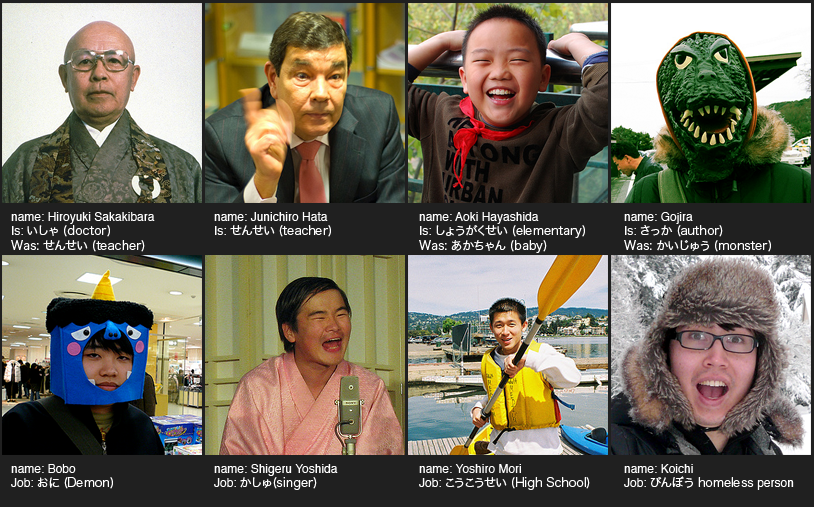
Take a look at this “Job Board.” We have eight “interesting” people that we’ll be asking you about, using the grammar you’ve just learned. I’m going to try to trick you a little bit too, so be careful. Here’s what we’re going to do.
1. Describe things about these people. If you know what their job is, and what their name is, you can talk about them a bit (or ask about them, too!). For example:
AはBです
A is B
ひろゆきさん(A) は いしゃ(B) です
Hiroyuki-san is a doctor
2. Ask questions about people, so that you can answer those questions about said people.
ひろゆきさん は いしゃ ですか
Is Hiroyuki-san a doctor?
はい、ひろゆきさん は いしゃ です
Yes, Hiroyuki-san is a doctor.
3. Now, of course, you don’t always have to answer “yes.” You know how to answer “no,” as well!
ひろゆきさん は せんせい ですか
Is Hiroyuki-san a teacher?
いいえ、ひろゆきさん は せんせい じゃありません。 ひろゆきさん は いしゃ です。
No, Hiroyuki-san is not a teacher. Hiroyuki-san is a doctor.
See how those answers played out? Every single one of them followed the pattern you learned earlier: “AはB.” And, they all used the different noun tenses you’ve learned as well (です, でした, etc).
Last Name Vs. First Name In Japanese, first and last names are a bit different. You can (and should) add さん to a name whether it’s a first or last name. So, for “Hiroyuki Sakakibara” up in the Job Board, whether you’re saying ひろゆきさん or さかきばらさん, you should add san on there. As for which one to use, both work, but last name is more formal and good to use on people you don’t know as well. First name is used in slightly more casual / neutral settings. Just feel it out – if you don’t know which to do, go with last name + san, since that one is going to be safer (then, if they’re like … “no no, don’t use my last name blah blah blah,” you can switch).
Now, before you start using this “Job Board,” I thought it would be useful to learn some of the jobs that are up there. I’ve created a list you can use to study.
a いしゃ → Doctor
a せんせい → Teacher
a しょうがくせい → Elementary School Student
a ちゅうがくせい → Middle School Student
a あかちゃん → Baby
a さっか → Author / Writer
a かしゅ → Singer
a こうこうせい → High School Student
a うんてんしゅ → Driver
a せいじか → Politician
a けいさつかん → Police Officer
a べんごし → Lawyer
a てんいん → Shop Assistant
a かいしゃいん → Company Employee
Go through the above words and make sure you can say all of them. Then pick out the ones you already know (should be a couple, because some of them are vocab you’ve seen before). Lastly, pick out a couple (or maybe three or four) new ones and cram study them the best you can. Learn them in your short term memory, then download the Jobs Vocab Deck.
Study the Jobs & Occupations
Import it to your TextFugu Vocab Deck and then study away. Hopefully you don’t have too many reviews to do so you can see a lot of the new cards above, but if you do just get through your reviews and move on (and continue getting through your reviews!).
Anyways, once you’ve studied the above words, you should be slightly more prepared for practicing the grammar with them. By no means do you have to know all the words, just be familiar with a good chunk of them. It just means you can focus more on the grammar, rather than getting stuck on vocab the whole time (you should get stuck a little, that means you’re learning!).