
The “Required In Every Japanese Textbook” Dumb Story Part 1
“Mary Makes A Horrible New Friend”
(Hold on to your horses. Audio for this chapter is coming)
I don’t know about you, but maybe you’ve used a Japanese textbook before. Almost all of them have conversation practice along the lines of:
- Exchange student comes to Japan.
- Exchange student makes friends.
- Exchange student has dumb exchange student adventures.
This, however, is the TextFugu version of that. Maybe you like those stories. If so, maybe you should use another textbook. Sure, in theory those stories could be applicable to you. Maybe you will become an exchange student someday (and have a name like メアリー or スーザン), but more likely than not, stories like these just have you memorize words and phrases in the hopes that you’ll use those words and phrases later.
Instead, I think you should take a different approach. Who cares what the story is about, as long as it’s interesting. If it’s engaging and you are enjoying it, you’ll be motivated to study more, and that’s what’s really important. Now, I can’t say the stories we’ll be doing here on TextFugu aren’t dumb. They are. But I do hope you feel engaged and enjoy them, at the very least.
Here is the purpose of my stories, and how I’ll be doing things.
- Create a narrative: The story will continue throughout TextFugu, preferably leaving you on some kind of cliffhanger at the end of each. This will serve to motivate you to get to the next one (and really force you to understand the text), hopefully.
- Help with “conversation”: Up until now, we haven’t really focused on conversation skills. Instead, we’ve been building a foundation, so that when you get here, you’ll be ready. You’re still not 100% ready, but I do want you to get started sooner rather than later. Conversation is as important as reading and writing, and probably more useful for you, so from here on out focus will be divided between the two.
- Teach the little things: There are a lot of little grammar points that are a bit too small to get their own chapter. Stories like this are a great opportunity to teach and review easy-to-learn grammar in a fun way. Of course, we’ll keep track of what grammar you’ve learned in these stories, and bring them back for review.
I think that about sums it up, but the best way to get into it is to get into it. Let’s see what Mary’s been doing in Japan. To start off, let’s introduce the characters.

メアリーさん: Mary is an exchange student from Texas. She has just moved to Nagoya, Japan to study abroad, and of course, she’s looking for some friends. Her favorite foods are hamburgers and fries, and she really hates raw things (or even fish when it’s cooked, for that matter). She thinks back to her days in Texas, wishing she had decided to study abroad to Italy, or France, or someplace where people spoke American. She’ll be hanging out with the European exchange students in Japan, most likely. It’s going to be a very long year for Mary, especially since her host family seems to get very upset every time she forgets to take her cowboy boots off at the door.
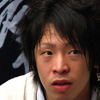
たけしさん: Takeshi is a local student at the University of Nagoya (名古屋大学)… or that’s what he wants you to think. I can’t give away his real purpose here, but I can tell you that he is a very good student. Enrolled in 23 different classes, including 林田先生’s advanced physics course (see below), he is always top in his class… despite having never registered for any of these. Teachers just assume that he’s supposed to be there. It must be the always-confident vibe he gives off, no matter where he is or what he’s doing.

林田先生:Hayashida-sensei is the local physics professor. An eccentric, but lovable dude. Wishes he could travel back in time to save his wife from the dinosaurs… from the last time they traveled back in time. But, of course, that’s a secret. The police just assumed that she ran off, maybe to Russia, because 林田先生 was just too much of a genius to put up with. Of course, the truth is that they both loved each other very much (and treated each other very nicely). After two years of court preceding and other court room-ish shenanigans, he was set free and allowed to teach again. His original employer, the Harvard-esque Tokyo University wouldn’t take him back. Ever since then he’s been teaching at Nagoya University, trying to find a way to fix his time machine and go back to save his wife.
More characters will be introduced soon, I’m sure, but for now, this will do it for this particular conversation. Everything will be in a “conversation” form, like you’re reading a script. Descriptions of things happening around the conversation will be written sometimes in English, sometimes in Japanese. An explanation of the conversation, line by line is provided below the story. This conversation should be fairly easy for you to understand, with a few un-learned grammar points thrown in for some extra learning. I hope you enjoy the first surely intriguing chapter: “Making New Friends.”
Part 1: Making New Friends
メアリー walks up to たけし to ask him what time it is (and practice her pretty pathetic Japanese). Also, this たけし is kind of cute, even though she’d really just prefer to hang out with Europeans all the time.
メアリー: おはようございます。
たけしさん looks up with a furrowed brow.
たけし: おはようございます?
メアリー: はい、おはようございます。
たけし: 違いますよ。今は午後10時です。「こんばんは」が正しいです。
メアリー: そうですか? こんばん。。。何?
たけし: わ。
メアリー: ありがとうございます。
メアリー waits a moment, awkwardly, as たけし goes back to reading manga while sitting on the bench outside Nagoya University’s science building.
メアリー: あの、すみません。
たけし looks up, annoyed.
たけし: なに?
メアリー: 名前は何ですか?
たけし: 名前を教えない。
メアリー: なぜ教えないの?
たけし lets out a big sigh.
たけし: 名前はたけしです。
メアリー: たけしさんですか?いい名前ですね。たけしさん?
たけし: はい?
メアリー: お元気ですか?
たけし: 日本人は「お元気ですか」をあまり言わないよ。
メアリー: そうですか?
たけし: そうですよ。
メアリー: Hmm、オ!今何時ですか?
たけし: 英語でいい?
メアリー: もちろん!
たけし: タイム・ツ・ダイ。
メアリー: 2? Two what?
たけし: タイム・TO・ダイ!
The next day, a missing person’s report was filed, for Mary didn’t come home, and nobody knew where she went, except for 林田先生, who was watching from the bushes (where he slept at night).
…to be continued.
Line-By-Line
As you went through the conversation, you probably noticed a few small things that you haven’t learned yet, and maybe there were a few things you have learned but they feel a little shaky. We’re going to go through each and every line to make sure you understood what went on. Not only that, but the goal is to help you understand the concepts behind each line as well. If you can’t replicate the concepts behind the grammar, you aren’t learning enough. It’s no good to just repeat and memorize if you’re going to go out and use this in real life.
メアリー: おはようございます。
Although we haven’t gone over this yet, おはようぎざいます is “good morning.” Usually, you’ll want to say this in the morning (duh), as we’ll learn in just a few more lines.
たけし: おはようございます?
Takeshi asks “good morning?” Obviously something is confusing about Mary saying おはようございます in the first place.
メアリー: はい、おはようございます。
“Yes, good morning,” she replies. Apparently Mary hasn’t been studying her Japanese enough.
たけし: 違いますよ。
違います(ちがいます)literally means “different,” but you can use it to mean “that’s not right” or “it’s different than _______.” In this case, 違います means “that’s not right.” You’ll also notice that there’s a よ on the end. By using よ as a sentence ender, it means something along the lines of “you know.” It also adds a bit of emphasis on what the person is saying. In this case, adding a よ to 違います puts emphasis on the 違います.
今は午後10時です。
今 means “now,” as you’ve probably already learned from the kanji chapters. 今は午後10時です means “it’s 10pm right now.” Let’s break it down.
今(いま)= now
午後(ごご)= p.m., afternoon
10時(じゅうじ)= 10 o’clock
The は of course is the particle は, and in this sentence would mean “is.” 今は = “now is.” You could also say 午後8時です or 午後1時です. Want to say a.m. instead of p.m.? Switch 午後(ごご)out with 午前(ごぜん).
「こんばんは」が正しいです。
「」are essentially Japanese quotation marks. Takeshi is saying: “‘Good evening’ is correct.” One important thing to note is that こんばんは isn’t pronounced konbanHA, instead, you pronounce it konbanWA. The は on the end is the particle は, which means you pronounce it like わ. 正しい(ただしい)is an い-adjective, and it means “correct.”
メアリー: そうですか? こんばん。。。何?
そうです means “it is so,” and is a common phrase, one you should probably stick in your memory somewhere, right now. In this sentence, Mary is asking a question, though (see the か on the end?), so そうですか means “is it/that so?”
She then goes to ask another question, because she couldn’t hear what the correct thing to say was. こんばん。。。is the first part of こんばんは (good evening), but she couldn’t remember it, so she added a 何(なに)to the end replacing the missing は, to essentially ask “Good Even-what?”
たけし: わ。
WA. We wrote it as わ instead of は because he’s explaining the pronunciation of it, not the spelling. This is a conversation after all.
メアリー: ありがとうございます。
ありがとうございます. Thank you.
メアリー: あの、すみません。
あの is about the same as saying “ummm” in English. Just a word that shows you’re trying to say something, or you’re thinking about what you want to say. In this case, it just helps with the awkwardness of the whole situation. すみません means “excuse me,” and is definitely an important word to learn. “Ummm… excuse me.”
たけし: なに?
“What?”
メアリー: 名前は何ですか?
名前(なまえ)は何(なん)ですか? What is your name? 名前, as you should know, means name.
たけし: 名前を教えない。
Hooray, a negative dictionary form verb. 教える(おしえる)means “to teach.” In this case, it means “I won’t teach you my name,” but a more fluid translation would be something more like “I won’t tell you my name.”
メアリー: なぜ教えないの?
なぜ means “why” in Japanese (it’s a more polite way to say it too – another alternative is なんで which is more casual). なぜ教えないの? is “why won’t you teach me (your name)?” The の at the end is something that you can add on to questions if you want. It does make you sound more feminine though, so be careful about this one if you’re a guy.
たけし: 名前はたけしです。
It seems as though Takeshi has given in. He tells her his name. “(My) name is Takeshi.” You’ll notice that Takeshi doesn’t add さん to his own name. This is important, because you aren’t supposed to add さん to your name as it elevates you and humbles others, the exact opposite of what you really want to do.
メアリー: たけしさんですか?いい名前ですね。たけしさん?
たけしさんですか? ”It’s Takeshi?” いい名前ですね。”(That’s) a good name, isn’t it?”
ね on the end of a sentence means something along the lines of “isn’t it?” and sort of has a connotation where it’s asking the other person to confirm what you’re saying. Mary then goes to say Takeshi’s name in a questioning tone. “Takeshi?”
たけし: はい?
Yessss?
メアリー: お元気ですか?
“How are you?” / “How is your health?” お元気ですか(おげんきですか)is one of the first things most textbooks teach you. The sad thing is, people in Japan don’t really use this, even though everyone tries to teach it. I suppose it’s because English speakers feel more comfortable when they can ask “How are you,” and this is the closest translation someone could come up with. It’s only in this conversation so I can explain that people don’t really use お元気ですか as much as people say. Takeshi agrees:
たけし: 日本人は「お元気ですか」をあまり言わないよ。
“Japanese people don’t say ‘How are you’ very much, you know.”
日本人は…
As for Japanese people…
「お元気ですか」をあまり言わないよ…
Don’t say “How are you” very much. One new grammar point in here is あまり. あまり means “not too often” or “seldom.” Stick it to to the front of a negative verb and you’ll be able to say “I don’t do _____ very much.” あまり食べません (seldom eat), あまり飲みません (seldom drink), etc. In this case, Japanese people seldom say “お元気ですか.”
メアリー: そうですか?
“Is that so?” Hopefully you remember going over this one already.
たけし: そうですよ。
Takeshi is affirming. “Yes, it is so.”
メアリー: Hmm、オ!今何時ですか?
“Hmm, Oh!” ← Apparently Mary has been thinking of what she wants to say next. Good for her!
今何時ですか? “What time is it now?” You probably remember 今(いま)from earlier, and 何時 means “what time.” So, 今何時ですか = “What time is it now?” This is a good “set phrase” to learn, as it’s always useful!
たけし: 英語でいい?
“Is English okay?” One particle in here you haven’t learned is で. We’ll go over this one in more detail at some point soon, but で means “in,” “at,” or “by way of.” In the case of the sentence above 英語で means “in English.” Other examples of where to use で include: 車(くるま)で, by way of car, レストランで, at the restaurant, etc. Takeshi is asking “Is in English good?” (i.e. “Is English okay?”)
メアリー: もちろん!
“Of course!” Mary is excited that he’s about to speak some English.
たけし: タイム・ツ・ダイ。
Can you guess what this means? it’s English, but written in katakana, because that’s how Japanese people tend to pronounce English words. If you can learn to convert English words into カタカナ sounds, Japanese people understand what you’re saying 100x better than if you speak in your own English accent.
メアリー: 2? Two what?
Mary is confused. She thinks ツ is “two” and not “to.” Takeshi clarifies:
たけし: タイム・TO・ダイ!
“Time to Die!” It seems as though Mary’s exchange to Japan really wasn’t the best idea for her.
So how’s that for thorough? We’ll be doing quite a bit of these as we move along. It’s a good way to review things you’ve already learned, learn new (small) things, and get into the “how can I use this stuff?” mindset.
Before You Move On:
- Make sure you understand every sentence in the story
- Probably also a good idea to make sure you can read (out loud) everything in the story as well. Maybe you have someone you can practice with?
- Review and write down any new grammar you’ve learned (there are at least a few in there!), with some notes to help you remember how they’re used. They’ll come up again, but it’s good to have your own notes in case you forget / need to use one of the grammar points.
- Ponder what could have happened to メアリー. Did she make it? Did she leave this world? Also, what’s up with Takeshi? Can you guess what his deal is?
- http://www.flickr.com/photos/london/354810138/
- http://www.flickr.com/photos/mshades/844742853/
- http://www.flickr.com/photos/turn_your_swag_on/3818143718/